
§ 13
Service as Self-Interest
Lift the foundation and you rise with it
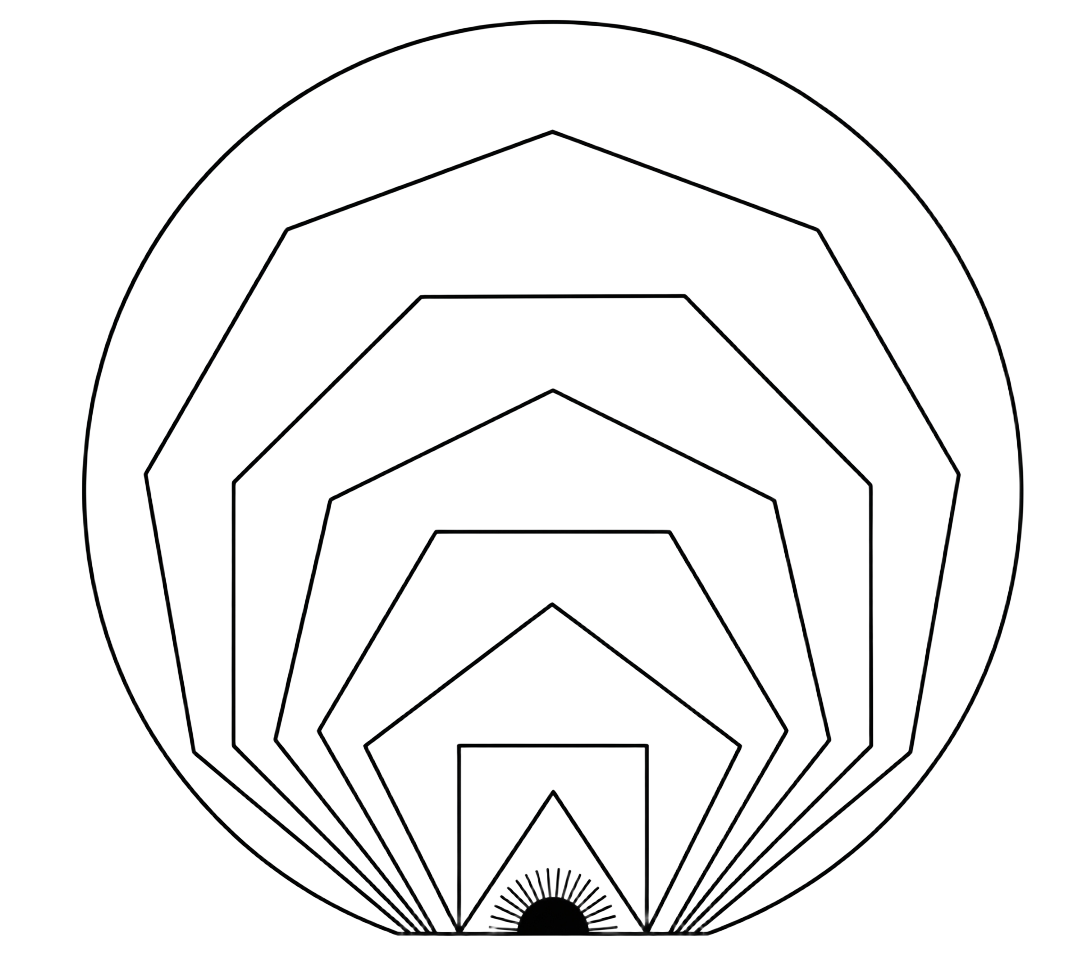
The book uses a simple image. Imagine you're tethered to a foundation by something elastic. You try to climb — the tether stretches, then snaps you back down. You try harder — same thing. The only durable way up is to lift the foundation itself.
The foundation is the people around you, the communities you're part of, the systems you rely on. You and they are not separate things. You are continuous with them in a way that the interface mostly hides. The interface tells you ‘help yourself first.’ The substrate's geometry says it doesn't work like that.
Hoffman's conscious-agent network gives this a structural reading. The agents aren't separate — they're nodes in a connected graph. Modify your local node in isolation and the network's structure pulls you back. Modify the network and you modify yourself by definition.
The empirical version is straightforward: prosocial behavior correlates with subjective wellbeing across cultures (Aknin et al., 2013), and the effect is causal in well-controlled designs. ‘Lift the foundation’ is not an ethical posture in this framework. It is mechanics. The system you're embedded in is the system you are.